







Your cart is currently empty.
Not sure where to start?
Try these collections:
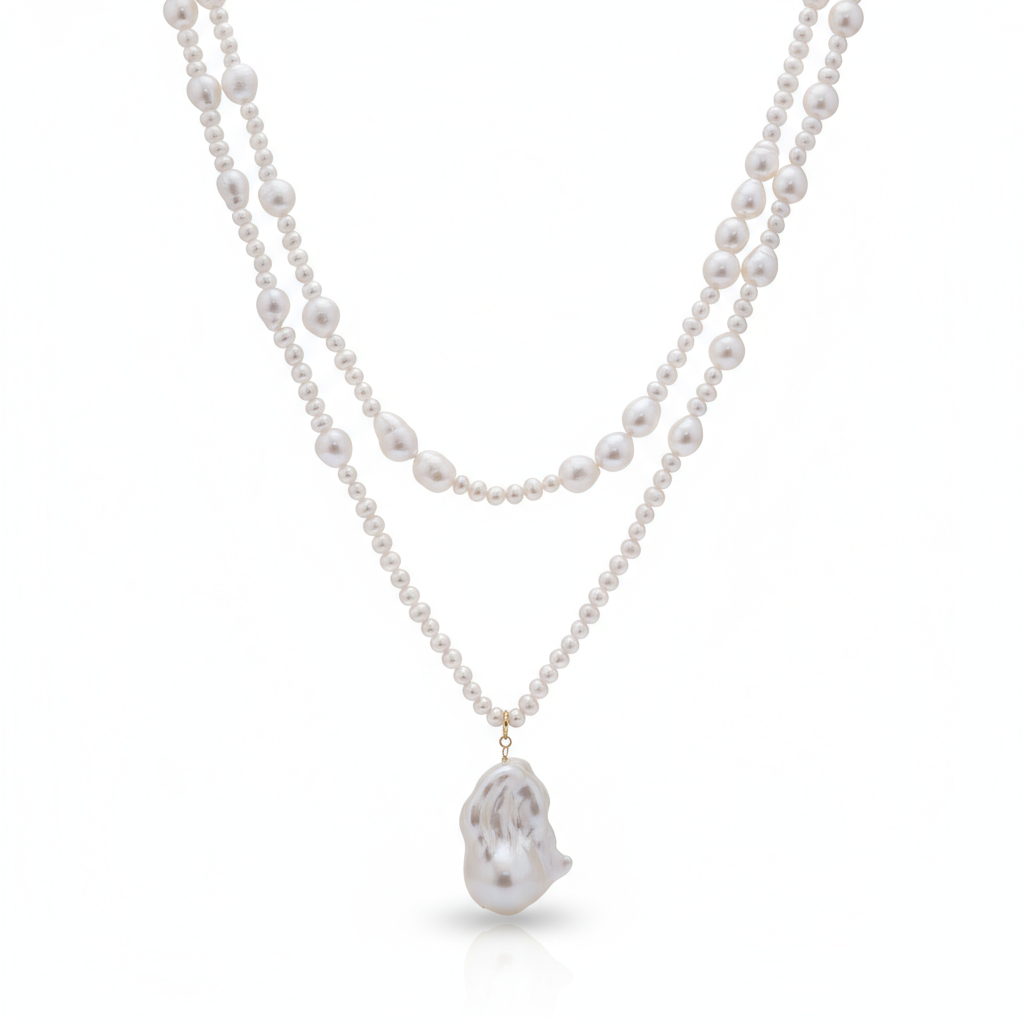
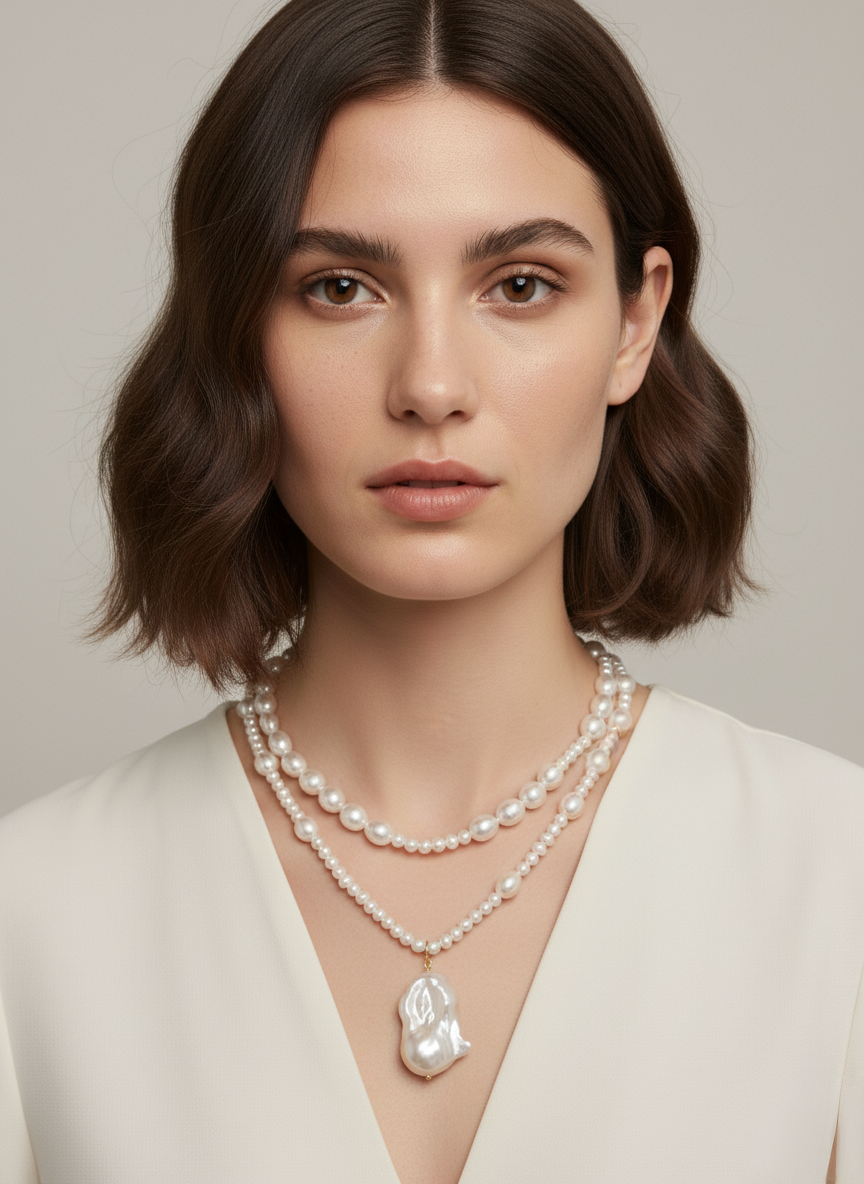
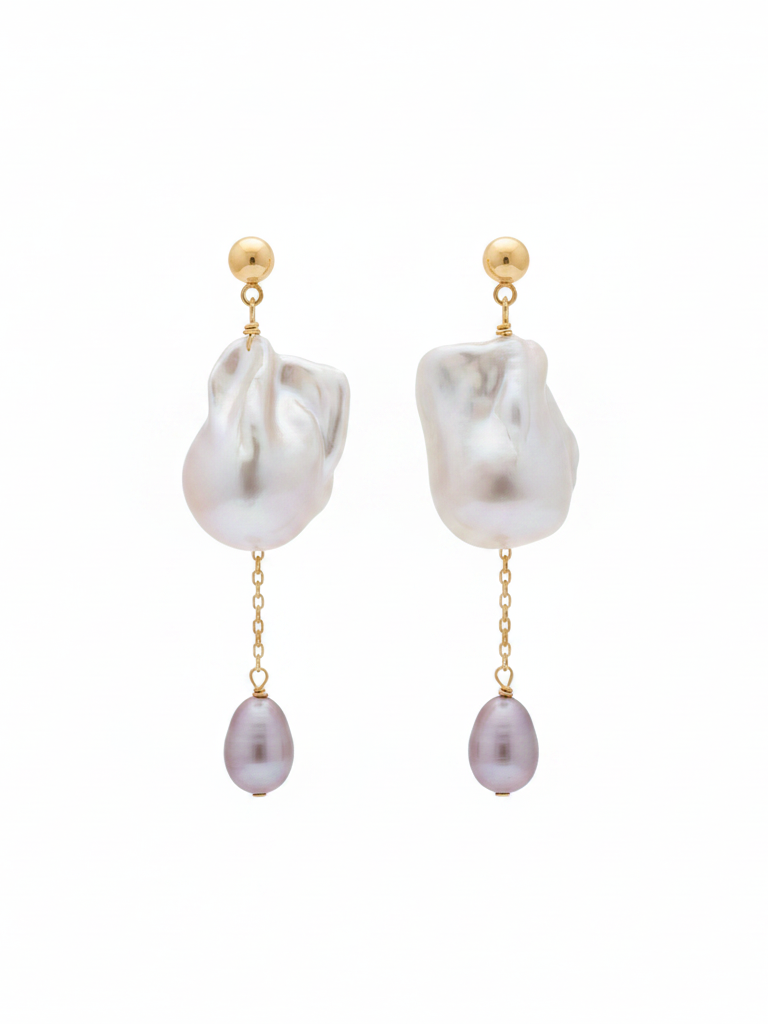

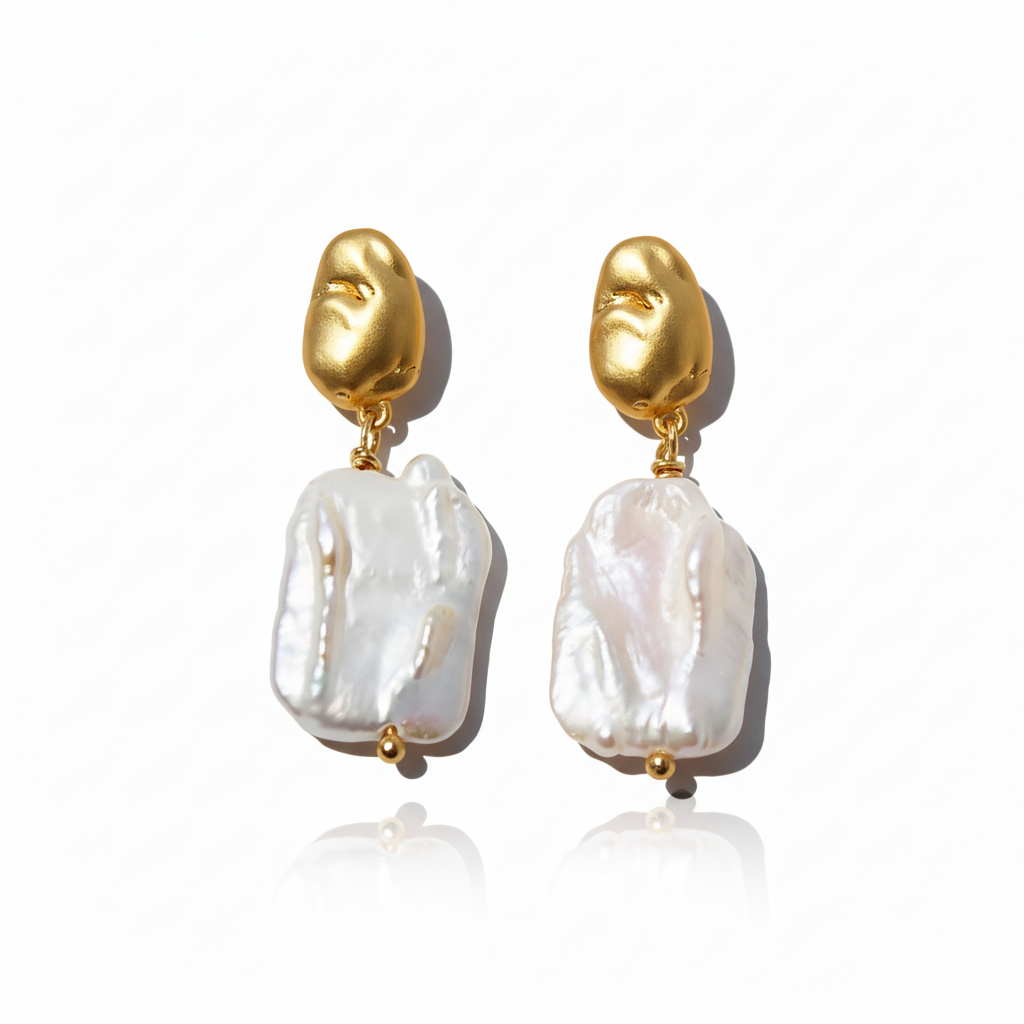
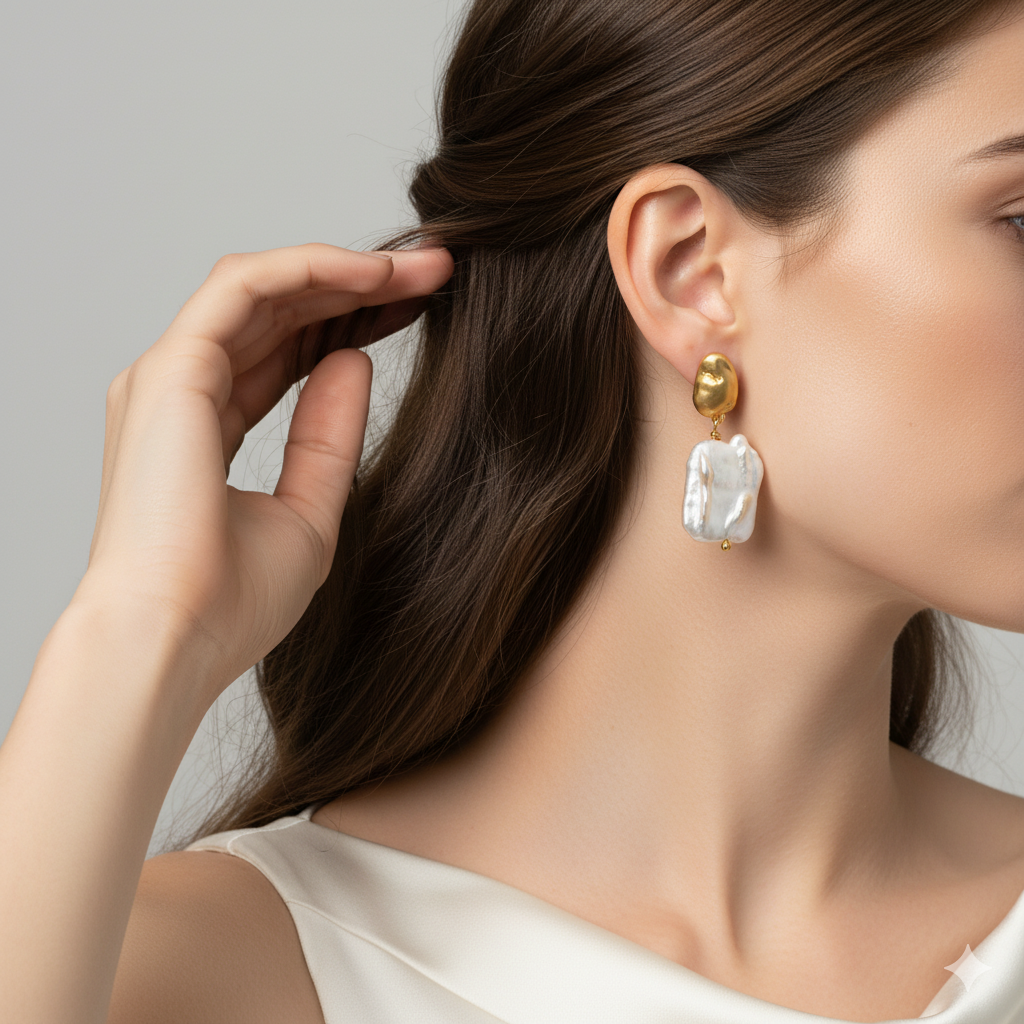




The weight of a clasp closing. The way a strand settles against the skin without adjusting. The slight resistance of a well-set post. These are not accidents. They are the result of decisions made long before the piece was photographed — decisions about proportion, about metal depth, about the number of millimetres by which a setting cup is raised.
-
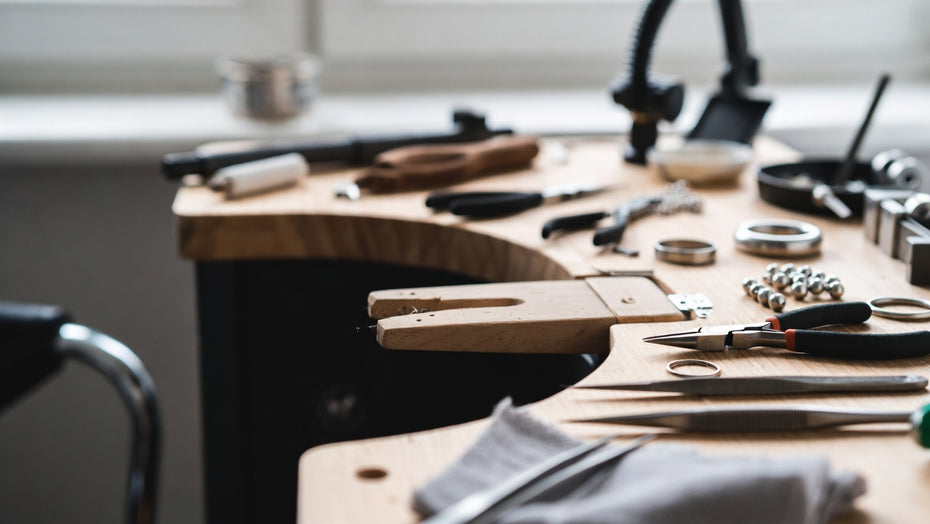
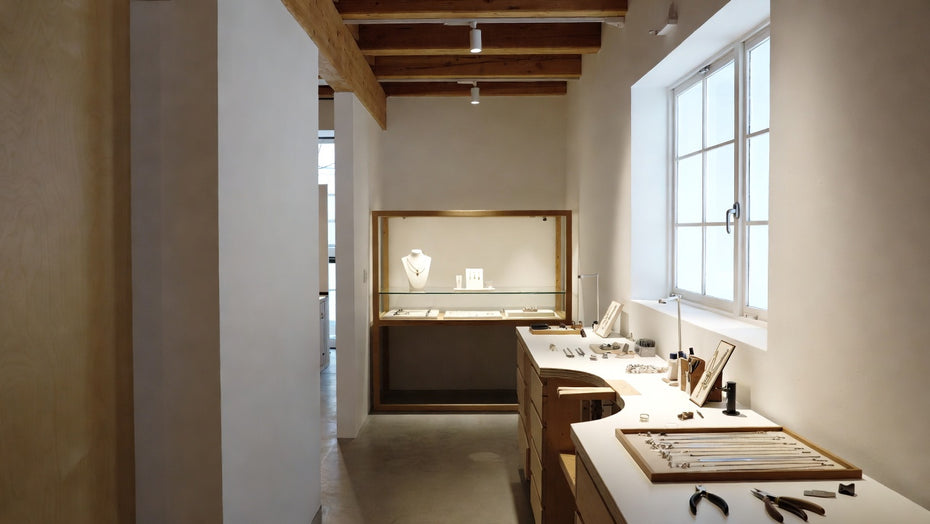
We do not describe our process as artisanal because the word has lost its meaning. We describe it as what it is: small-batch, examined, held to a standard that would embarrass us if it slipped.
We work with three pearl types, chosen for what each does.
-
Freshwater pearls are grown in freshwater mussels, primarily in China. Warmer in colour than saltwater pearls, more varied in form, more accessible in price. We select them for lustre — the sharpness of the light they reflect — rather than for roundness alone. A slightly off-round pearl with exceptional lustre is more interesting than a perfect sphere that sits flat.
-
Akoya pearls are grown in the Akoya oyster in Japan and China. Rounder, cooler in colour, sharper in lustre. The benchmark pearl for a strand. Every Akoya piece in the collection uses pearls hand-graded across the full strand — matched for lustre, colour, and form by the same hands that will string them.
-
Baroque pearls are the ones that refused to be round. The nacre deposited unevenly as the pearl formed, and the result is a shape that is entirely its own. We use baroque pearls where the irregularity is the point — not as a cheaper alternative to round, but as a deliberate design material. The Baroque Sovereign collection was built around them.
Entry and mid-tier pieces are made in 18-carat gold vermeil: a layer of 18-carat gold, at least 2.5 microns thick, deposited over a base of 925 sterling silver. The distinction from standard gold plating is material. Standard plating sits on a base metal and may be less than one micron thick. Vermeil requires sterling silver as the base and a minimum gold depth. The difference is felt over years, not weeks.
-
Solid gold, 14-carat or 18-carat, is used at the upper end of the range. Vermeil is retired at the premium tier. Every product on the site is named correctly: if it is vermeil, it says vermeil. If it is solid gold, it says solid gold.

Premium strands are hand-strung on silk thread and hand-knotted between every pearl in the traditional manner. The knot does two things. It prevents pearl-on-pearl contact, which would erode the nacre over time. And it means that if a thread ever frays, only one pearl is at risk — the rest remain strung. A hand-knotted strand can be restrung indefinitely. We offer complimentary restringing under our lifetime aftercare.
-
We examine every piece before it leaves the studio. Not by exception. By practice.
We will send you an email to reset your password
Not sure where to start?
Try these collections: